A DSV (diving support vessel) is a vessel specialised in supporting commercial diving operations offshore. It carries a full saturation system on board, a diving bell, dynamic positioning, a heavy-lift crane and usually an ROV. It's a work platform, a workshop and crew accommodation all at once.
When someone asks where a saturation diver lives during a campaign, the answer is almost always the same: on a DSV. The initials come from the English diving support vessel, dive support vessel, and they refer to a type of ship built or converted specifically to put divers in the water at depths where conventional diving stops being viable.
It isn't a generic boat with a compressor on deck. A modern DSV is an expensive, complex piece of engineering whose purpose is to keep a group of people pressurised and alive for weeks, put them on the seabed, and bring them back. Everything else on the vessel is subordinate to that.
What a DSV is actually for
The typical work of a DSV is the construction, inspection, repair and maintenance of subsea infrastructure. In practice that means pipeline connections and risers, installing and replacing parts on wellheads, structural inspection of fixed platforms, cutting and welding, anode replacement, removing structures at the end of their working life, and incident response.
A lot of that work can be done by an ROV. What justifies the cost of a DSV is everything a robot still can't handle well: fine manipulation, unplanned tasks, working inside structures, and decisions that need a pair of hands and judgement right in front of the problem. That's why DSVs usually carry divers y an ROV, not one or the other.
What sets a DSV apart from other offshore vessels
There are subsea construction vessels that don't dive, ROV support vessels, platform supply vessels and crane vessels. What makes a DSV different is the permanently installed saturation system and the associated class certification. A vessel can have an enormous crane and not be a DSV; a DSV without an operational saturation system stops being one functionally.
The saturation system: the heart of the vessel
The saturation system is a set of interconnected steel hyperbaric chambers, usually installed on deck or in a dedicated space on the vessel. Inside them the divers live at the pressure corresponding to the working depth, breathing a mixture of helium and oxygen.
A complete system usually includes living chambers where the divers sleep and eat, transfer chambers for moving into the bell, a hyperbaric treatment chamber in case of a decompression accident, locks for passing in food, clothing and material, and the set of gas banks, CO2scrubbers, and temperature and humidity control that keep that atmosphere breathable.
All of that is run from a control room manned twenty-four hours a day by life support technicians. Capacity is measured by the number of divers the system can house at once: systems for 12, 18 or 24 people are common, and they determine how many teams can rotate. If you want the detail of how that living regime works, we explain it in the guide on what a saturation diver is.
The bell and the moonpool
The diving bell is the lift. It's a pressurised steel sphere or cylinder that goes down with two or three divers inside to the working depth, holds the system's pressure, and lets one or two go out into the water while another stays inside as bellman, watching and ready to assist.
El moonpool is the vertical opening in the hull through which the bell enters and leaves the water. Placing it near the centre of the vessel is no accident: it's the zone with the least motion, which widens the weather window in which work can continue. Some DSVs launch the bell over the side, but a central moonpool is what allows operating in rougher seas.
Handling the bell is done by a launch and recovery system with motion compensation, a main winch and an emergency line. It's one of the vessel's critical safety points and has redundancy in almost every element. We go into more detail in the article on the closed bell.
Dynamic positioning
A DSV doesn't anchor while there are divers in the water. It holds position with dynamic positioning: a system that combines position references (differential GNSS, acoustic references on the seabed, laser systems or cable tension) with computer-controlled azimuthal and bow thrusters.
Vessels that work with divers operate in DP class 2 or DP 3, which require enough redundancy so a single failure doesn't cause a loss of position. The reason is direct: if the vessel drifts while a diver is connected by umbilical to the bell, the umbilical goes taut. That's why the DP operator and the diving supervisor work in coordination, and procedures exist for immediately abandoning the work point.
Crane, ROV and work deck
The deck of a DSV is an industrial zone. There's usually a main crane with wave compensation capable of lowering loads to the seabed with precision, holds and open space for the client's equipment containers, lay towers on some vessels, and hangars for one or two work-class ROVs.
The ROV doesn't compete with the diver, it accompanies him: it gives continuous video of the task, provides lighting, carries tools and serves as a witness for the client. On many operations the ROV goes down first to inspect and clear the area, and only then is the bell launched.
The diver's tools are mostly hydraulic or pneumatic, powered from the surface: impact wrenches, grinders, saws, hammers, cutting and welding equipment. In the section on equipment there's more detail on what's used and who makes it.
What life on board is like
A DSV's crew is split into two worlds. The ship's crew, the DP team, the ROV operators, the deck crew and the supervisors live in the vessel's normal cabins. The divers in saturation live inside the system, under pressure, and don't come out until the end.
Inside the system space is tight: bunks, a common area, toilet and shower. Food comes in hot through the lock, clothing is changed the same way. The helium atmosphere makes voices sound high-pitched, which is why voice unscramblers are used for controlled communication. Heat is lost very fast in a helium atmosphere, so the temperature is kept fairly high and tightly controlled.
Work is organised in continuous shifts: while one team is in the bell, another rests and another is on standby. The vessel doesn't stop. A typical saturation campaign runs to around four weeks, with the final decompression at the end, and we go into that in the article on how long a saturation campaign lasts.
Who operates these vessels, and where
DSVs are operated by subsea services contractors who combine vessel, system and crew, and work under contract for oil and gas operators or offshore wind developers. Familiar names in the sector include Boskalis, DOF, Helix Energy Solutions and TechnipFMC, among others; we keep the company directory list up to date.
Geographically, the work is concentrated where there's subsea infrastructure to maintain: the North Sea, the Gulf of Mexico, the coast of Brazil, the Persian Gulf, West Africa and Southeast Asia. Each market has its own seasonality, required certifications and rates, and we go through that in where the work is.
If you're interested in which specific vessels are operating today and their characteristics, we keep a profile per vessel in the section on diving vessels.
How you end up working on one
Nobody starts their career on a DSV. The usual path runs through a commercial diving school, a recognised certification, time working in surface-supplied diving — port, civil works, inland — and only then the bell and saturation course. The reason is practical: in saturation there's no margin for learning the basics.
The full route, with timescales and costs, is in the guide on how to become a commercial diver, and the training options are in the directory of schools.
Frequently asked questions
What do the letters DSV stand for?
DSV stands for diving support vessel. It refers to a ship specifically equipped to support commercial diving operations offshore, usually with a permanently installed saturation system, a diving bell and dynamic positioning.
How many people work on a DSV?
It depends on the vessel and the campaign, but it's common to have between 80 and 130 people on board, counting navigation crew, the diving team, ROV operators, deck crew, catering and client representatives. Only some of them are divers.
Do the divers leave the saturation system during the campaign?
No. Once pressurised they stay inside the system until the end of the work period. They travel to the seabed inside the bell, which mates with the system, and return to it at the end of the shift. Decompression is done just once, at the end.
What's the difference between a DSV and a subsea construction vessel?
A subsea construction vessel can install structures and operate ROVs without carrying divers. A DSV also has the saturation system and the bell, along with the certification and the specialised crew that requires. Many modern vessels combine both capabilities.
Why doesn't the DSV anchor while there are divers in the water?
Because it needs to be able to correct its position continuously and precisely. It holds position with dynamic positioning in DP class 2 or DP 3, which requires redundancy so a single failure doesn't cause a loss of position while divers are connected by umbilical to the bell.
Published 20 August 2026 · By Arthur More, professional saturation diver

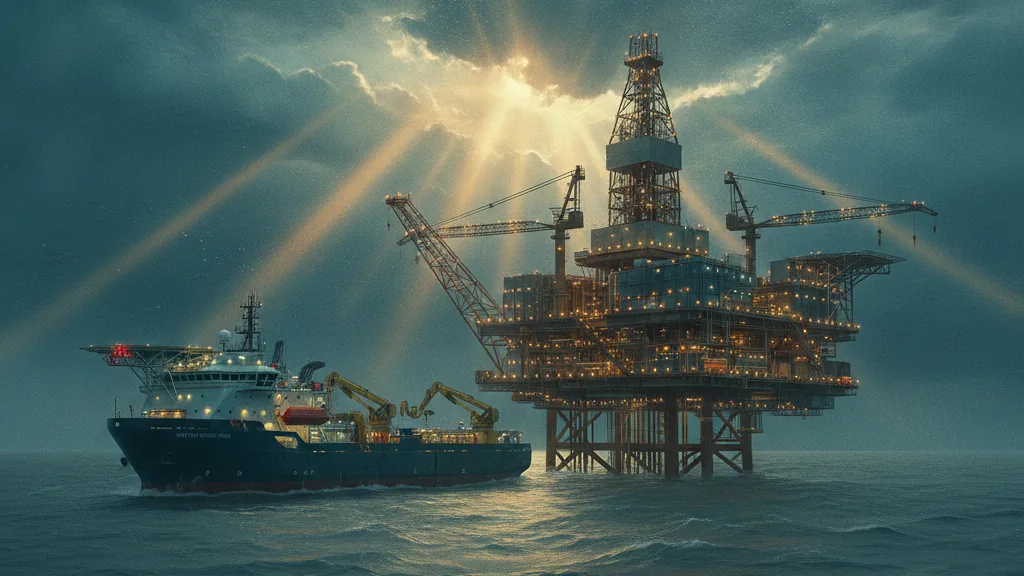
Photo: Cooperation Afloat Readiness and Training (CARAT) · CC BY via Openverse
This article is part of our in-depth guide to saturation Diving in Roblox vs the real thing — the complete picture, with sources.
This article is part of our in-depth guide to saturation Diving in Roblox vs the real thing — the complete picture, with sources.
This article is part of our in-depth guide to saturation Diving in Roblox vs the real thing — the complete picture, with sources.
This article is part of our in-depth guide to saturation Diving in Roblox vs the real thing — the complete picture, with sources.