Getting into commercial diving means passing two separate filters: a medical fitness examination and a physical condition assessment. The first looks for conditions incompatible with hyperbaric exposure; the second, the ability to work with heavy equipment for hours. Both are prepared for months in advance, with aerobic and functional-strength work, not maximal strength.
Many people who want to get into commercial diving focus on choosing a school and paying for the course, and find out too late that there are two filters before that which can't be bought: medical fitness and physical condition. One is passed with health; the other, with preparation. Neither can be improvised the week before.
Two different exams that get confused
It's worth separating them from the start, because they serve different purposes.
El The medical fitness examination is carried out by a doctor trained in hyperbaric medicine and looks for conditions incompatible with pressure exposure: middle ear and sinus problems, lung disease that could favour barotrauma, cardiovascular issues, epilepsy or other disorders carrying a risk of loss of consciousness. It doesn't measure your fitness, it assesses risk. We cover it in what the commercial diving medical certificate assesses.
La The physical condition assessment is run by training centres and, in some markets, by employers themselves. Here it's capability that's measured: whether you can work with heavy equipment, in the cold, for hours, and still be useful at the end of the shift.
The exact requirements vary by certification scheme and country, so the first task for any candidate is to ask in writing for the specific criteria of the centre and scheme they're applying to. In certifications y schools you'll find the starting points.
What's usually assessed
Aerobic capacity
This is the most common element. It can be measured with a stress test, a field test or a progressive test, and it's all after the same thing: checking that the cardiorespiratory system can sustain effort. It makes sense, because breathing against the resistance of a helmet, working against current and moving with equipment uses up far more than it looks like from outside.
Water competence
Swimming without equipment, staying afloat, free-diving reasonable distances, moving with ease. They're not looking for a competitive swimmer, but for someone who doesn't panic in the water, because anxiety is a real risk factor when things get complicated.
Strength and work capacity
Loading and moving material, climbing ladders with equipment, hauling hoses, holding tools. The assessment can be formal or simply come out of the course's practical sessions, where it becomes very clear who can keep up the pace.
Tolerance and equalising
The ability to equalise the ears normally is checked early on. A persistent difficulty equalising is a serious obstacle for the trade, and it's worth spotting before investing money.
How to train: what works
The most common mistake is training to look strong instead of training to work for a long time. The useful physical profile for this trade looks more like a resilient labourer than a bodybuilder.
Aerobic base
This is the priority. Three or four weekly sessions of continuous work — running, rowing, cycling, swimming — with most of the volume at moderate intensity and one interval session. Swimming deserves a place of its own, not just for the test but because it improves breathing mechanics and comfort in the water.
Fuerza funcional
Two or three weekly sessions focused on full patterns: squat, deadlift, pushes and pulls, loaded carries. Carries — walking with weight in the hands or on the shoulder — reproduce what's done on deck better than any other exercise.
Grip and forearm
Very underrated. Handling hydraulic tools, holding onto a structure and working in thick gloves all demand a grip that gives out before the legs do. Hangs, carrying loads and rope work all build it.
Core and lower back
Not for looks, but for protection. A large share of the injuries that take a diver out of work are back injuries, and they come from the deck, not the water.
Mobility
Shoulders, hips and ankles. A heavy helmet and a stiff suit limit movement a lot; turning up with poor mobility multiplies both discomfort and risk.
A sensible plan splits the week into three endurance sessions, two strength sessions and one dedicated swim session, with at least one full rest day. And it progresses slowly: most injuries in people preparing for a course come from ramping up volume in the last few weeks.
Mistakes that wreck the preparation
- Empezar tarde. Four weeks isn't enough to change aerobic capacity or to resolve a medical finding.
- Training strength only. Turning up strong but with no base fitness is the profile that struggles most on a commercial diving course.
- Leaving swimming until the end, and finding out in the pool that your technique isn't there.
- Not getting the medical check-up before paying. This is the costliest mistake of all: some findings require treatment, follow-up, or rule out the activity outright, and discovering that after the course is paid for is an avoidable problem.
- Hiding medical history. Besides invalidating fitness if it's found out, it puts your own safety at risk in an environment where a loss of consciousness is lethal.
- Neglecting sleep and diet during preparation, which is when they matter most.
After getting in
Passing the initial filter doesn't close the matter. Medical fitness is renewed periodically throughout the whole career, and it's what allows you to keep working: losing it means being sidelined, with the financial consequences we cover in insurance and social protection for the offshore diver.
Physical condition, meanwhile, degrades fast in a trade with intense campaigns and long spells at home. Professionals with long careers tend to share one habit: they keep training during their time off, not just before deploying.
If you're at the starting point, the full route — training, certification and first steps — is covered in how to become a commercial diver and in how to start with no experience. Physical preparation is the part you can start today, at no cost and without waiting on anyone.
The weeks before, and test day
Preparation doesn't end with training: how you arrive matters. In the last two weeks it's worth cutting volume while keeping intensity, so you arrive rested rather than worn out. It's the classic mistake of someone who's taken the preparation seriously and decides to push hard right at the end.
In the days before, the basics: sleep well, keep hydrated consistently, don't try anything new — not footwear, not supplements, not routines — and avoid anything that could cause congestion, because a blocked upper airway can stop you equalising and ruin the assessment over something trivial.
On test day, turn up with complete, valid medical paperwork, including any additional test that's been requested. And answer the medical questionnaire honestly: leaving out a medical history item to get through the filter is the most effective way to turn a manageable problem into a serious one underwater.
If something goes wrong, it's almost never final. A lack of fitness is fixed by training; a medical finding needs specific assessment and sometimes treatment. What you don't get back is the money for a course paid for before checking fitness.
It's worth remembering why these filters exist. They're not there to pick out the most athletic, but to stop someone meeting their physical limit, or an unknown condition, for the first time in the worst possible place: underwater, wearing heavy equipment, depending on a line someone else is holding from above. Seen that way, they stop looking like an obstacle and are understood as part of the same safety system that holds up the rest of the trade.
Frequently asked questions
Is there one standard physical test for everyone?
No. The specific requirements vary by certification scheme, country and training centre. What's consistent is the combination of an aerobic capacity assessment, a water competence check and a diving-specific medical examination.
Do you have to be very strong?
You need useful strength, not maximal gym strength. The work demands moving and holding heavy equipment, holding awkward positions and lasting for hours; that's trained with functional work, grip, core and endurance, more than with maximal lifts.
Can you get in if you're overweight?
It depends on the degree and its impact. The medical criterion looks at functional capacity and associated risk, and significant excess weight often comes with other factors that do affect fitness. The decision rests with the diving doctor.
How far in advance should you start preparing?
It's reasonable to think in months, not weeks. Three to six months of steady preparation gives you a margin and, above all, lets you resolve any medical finding needing treatment or follow-up in time.
Is the test repeated afterwards?
Medical fitness is renewed periodically throughout the whole career. Physical condition isn't always formally reassessed, but it's what determines whether you can keep doing the job, and it degrades fast if neglected.
What happens if you don't pass it?
It depends on the reason. A lack of fitness is fixed by training and applying again. A medical finding needs specific assessment, and in some cases treatment, before reassessment. It's worth finding out before paying for a full course.
Published 23 August 2026 · By Arthur More, professional saturation diver
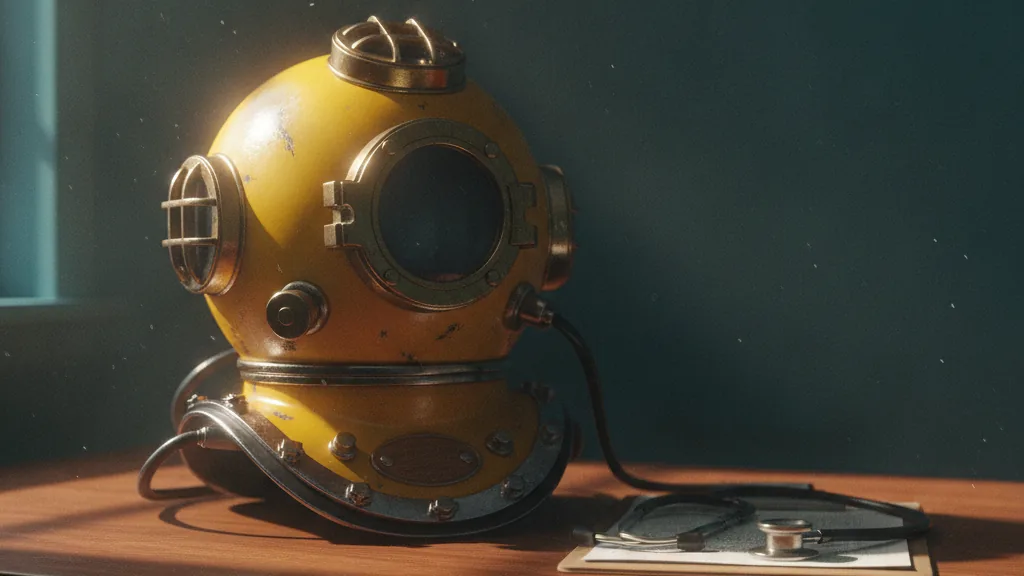
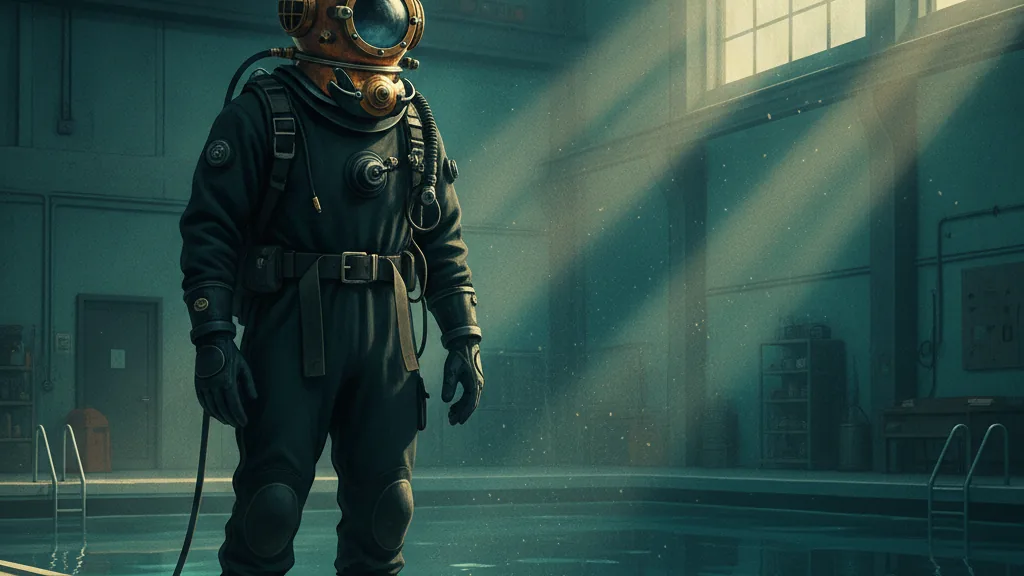

Photo: USAJFKSWCS · CC BY-ND via Openverse
This article is part of our in-depth guide to commercial diver requirements: the medical, eyesight and age limit — the complete picture, with sources.
This article is part of our in-depth guide to commercial diver requirements: the medical, eyesight and age limit — the complete picture, with sources.
This article is part of our in-depth guide to commercial diver requirements: the medical, eyesight and age limit — the complete picture, with sources.
This article is part of our in-depth guide to commercial diver requirements: the medical, eyesight and age limit — the complete picture, with sources.