Decommissioning is the orderly removal of offshore installations at the end of their working life: well plugging, cutting and removing structures, clearing pipelines and cables, and restoring the seabed. It generates underwater cutting, inspection and rigging work, and is one of the sector's most predictable sources of demand because it depends on the age of the installations, not the price of oil.
Every offshore platform has an expiry date. When the field stops being profitable, the installation isn't abandoned: it's removed, following a regulated, long and expensive process the industry calls decommissioning. For commercial diving, that process has become an increasingly significant source of work.
And it has a virtue no other segment offers as clearly: it's predictable. Structures age at a known rate.
What decommissioning an installation involves
The full process starts long before any underwater work, with planning and permits, and with production ceasing. The first technical phase is plugging and abandoning the wells, a drilling operation that permanently seals the well to prevent any future leak. It's the most expensive and critical part of the whole job.
Next the installation is cleaned and made safe: tanks are emptied, hydrocarbons removed, systems disconnected and the structure prepared for handling. After that the topsides are separated and removed, usually with large-capacity heavy-lift vessels or vessels designed to lift whole modules.
What's left is the underwater part: cutting the substructure, removing or safely leaving in place the pipelines and cables, recovering equipment from the seabed, clearing the site and confirming no obstructions remain. That's the phase where commercial diving comes in fully.
What a diver does in a decommissioning job
Typical work includes cutting metal structures underwater using the sector's own techniques, preparing lift points and rigging slings and tackle, disconnecting components, clearing marine growth from cutting areas, inspecting before and after each operation, and a final check of the seabed.
It's work that's intensive in rigging and coordination with the surface, more than in fine construction. The operation is planned down to the last detail, because every cut and every lift has consequences for the stability of what's left standing. The cutting and welding techniques involved are explained in underwater wet and hyperbaric welding.
Depending on depth, it's handled with surface-supplied diving or, on deep installations, with saturation from a support vessel. At greater depths, much of the work is taken on by remotely operated vehicles and remote cutting tools, with the diver stepping in where their presence adds an advantage.
Why it's stable demand
The logic is demographic rather than economic. A large share of the world's offshore infrastructure was installed decades ago and is approaching or has passed its design life. Those installations have to be removed sooner or later, and the restoration obligations are set out in the regulations and international agreements that apply to each region.
Unlike exploration, which slows down when the price of crude falls, decommissioning has a mandatory component: it's a liability that has to be carried out. It can be delayed, but it doesn't go away. That makes it an interesting counterweight within the sector's cycle.
The projects also generate inspection work before and after each intervention, which links well with the profile we describe in underwater inspection diver.
Where it's concentrated
The North Sea is the most mature setting and the one that generates the most literature and activity, with veteran infrastructure spread across British and Norwegian waters and a highly developed regulatory framework. It's the same environment that made northern Europe the benchmark for deep diving, as we cover in the North Sea, capital of saturation diving.
The Gulf of Mexico is the other major market, with a very high number of structures and a long tradition of removing platforms in shallow water. In Asia-Pacific and Southeast Asia, activity is growing as fields developed in recent decades age, a market we cover in saturation diving in Singapore and Southeast Asia.
To identify contractors it's worth looking at companies that combine diving, subsea construction and project services, listed in the directory of sector companies, and following listings on empleo.
An open debate worth knowing about
Not everything that's installed is removed entirely. There's a technical and environmental debate over what to do with certain structures: remove them completely, leave the lower section on the seabed, or convert them into an artificial reef, a practice used in some markets and disputed in others.
The arguments range from the impact of the removal operation itself to the ecological value these structures have taken on as habitat. For someone working in the sector, it's not an abstract discussion: the decision determines the volume and type of underwater work on each project. The best-known structures and their stories are covered in plataformas and in the world's most famous platforms.
How to position yourself
The certifications required are the general offshore ones, with no exotic requirements: commercial diving qualification recognised in the target market, a current medical certificate and survival training. What counts in your favour is the practical profile: experience cutting underwater, ease with rigging and lifting, the ability to work within heavily procedure-driven operations and, again, inspection qualifications.
If you're just starting out, the sensible order doesn't change: commercial diving training as described in how to become a commercial diver, choosing a school in schools, and specialising afterwards. Decommissioning isn't a separate way in; it's a type of project you reach with the same passport as the rest of offshore work.
How a project is planned
A decommissioning job is, above all, a planning exercise. Before anything is cut, a full inventory of the installation is drawn up, its structural condition is studied, the risks of each phase are assessed and the piece-by-piece removal method is decided. Projects are prepared over years.
For the underwater work, that planning translates into very detailed procedures: what gets cut, in what order, with what tool, who checks each step and what happens if something doesn't go as planned. The sequence matters because every piece removed changes how the load is carried by what's still standing.
That level of detail means decommissioning campaigns are, generally, heavily procedure-driven environments. For a diver with good procedural discipline it's comfortable ground; for someone who tends to improvise, it isn't.
Specific risks worth knowing about
Decommissioning has hazards of its own that don't show up on a new build. Work happens on aged structures, sometimes with undocumented damage, where the material's behaviour may not match the original drawings.
There's a risk of dropped objects during lifts, of unexpected movement as stresses built up in the structure are released, and of residue: hydrocarbon remnants, contaminated sediment or naturally occurring radioactive deposits that build up inside some pipelines and process equipment.
All of this is managed with procedures, prior analysis and protective equipment, but it's worth knowing about going in. It's one of the reasons these projects particularly value experience and the ability to stop in time when something doesn't match what was expected.
Frequently asked questions
What is offshore decommissioning?
It's the regulated process of removing an offshore installation at the end of its working life: permanently sealing the wells, cleaning and making it safe, removing the topsides, cutting and removing the underwater part, managing pipelines and cables, and restoring the site.
What underwater tasks does a decommissioning job include?
Cutting metal structures, preparing lift points and rigging tackle, disconnecting components, clearing marine growth, recovering equipment from the seabed, and inspecting before and after each operation.
Is decommissioning done with saturation or surface-supplied diving?
It depends on the depth of the installation. In shallow water, surface-supplied diving is the norm; on deep installations, saturation and remotely operated vehicles are used, taking on much of the work.
Why is it said to be stable demand?
Because it responds to the ageing of installations and regulatory removal obligations, not the price of crude. It's a liability that has to be carried out: it can be delayed, but it doesn't disappear, which gives it a predictability exploration doesn't have.
Where is decommissioning activity greatest?
The North Sea is the most mature market, with veteran infrastructure and a highly developed regulatory framework. The Gulf of Mexico is the other major hub by number of structures, and activity is growing in Asia-Pacific as its fields age.
Are all platforms removed completely?
Not always. Depending on the regulatory framework and the specific case, the whole structure may be removed, the lower section may be left on the seabed, or it may be converted into an artificial reef. It's an open technical and environmental debate that shapes the underwater work on each project.
Published 22 August 2026 · By Arthur More, professional saturation diver
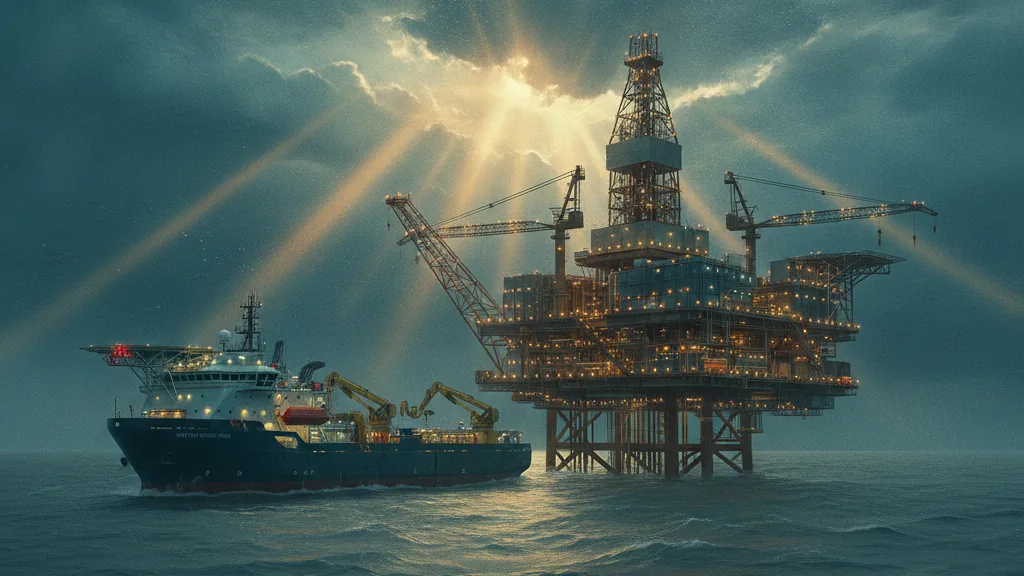
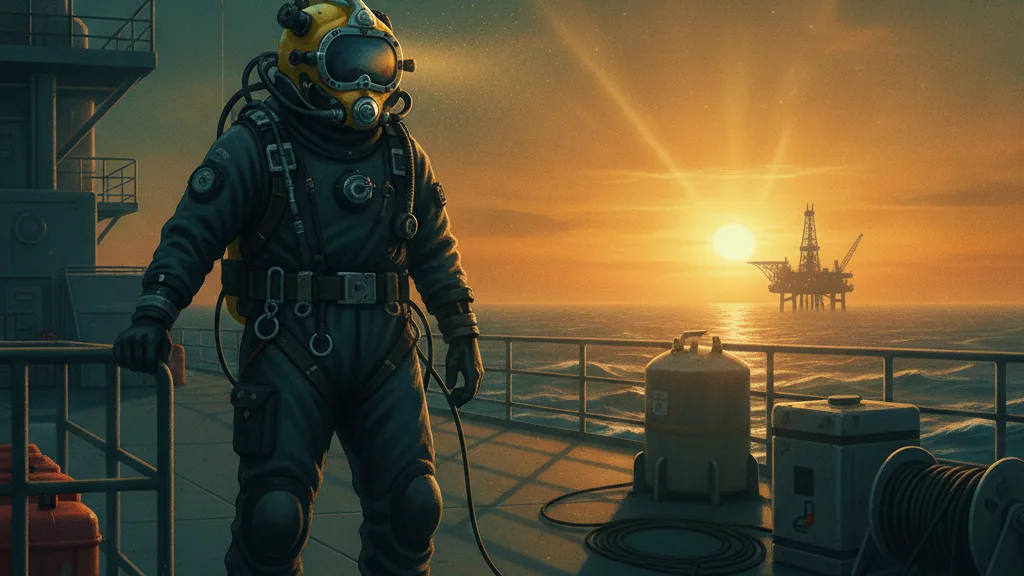
Photo: bseegov · dominio público via Openverse