India and Indonesia have active offshore and port sectors and real demand for commercial divers. Operators working to international standards exist alongside others that don't, and that difference marks the level of safety and pay. Before signing, it's worth checking the equipment, the recompression chamber, the evacuation plan and who the end client is.
India and Indonesia come up more and more in conversations about where the underwater work is. Both countries have long coastlines, intense port activity, working offshore energy sectors and plans to invest in maritime infrastructure. There's work, and there's going to be more.
That said, these are markets that call for a careful reading. Two very different realities coexist in them: projects run to international standards, audited and well paid, and much more informal local work where the level of safety depends on the judgement of whoever's in charge that day. Going in without telling the two apart is the fastest way to end up with a serious problem.
India: an established offshore sector and a huge port market
India has had offshore oil and gas activity for decades, mostly off the west coast, and a network of first-rate commercial ports spread across the whole peninsula. That combination generates two very different kinds of demand.
Offshore energy
Inspection and maintenance of platforms, subsea pipelines, mooring lines, single-point moorings and loading terminals. This is the segment where international contractors turn up, the dive support vessels and, occasionally, saturation diving. It's also where standards like IMCA apply, with client audits.
This is the segment a foreign diver should be aiming for: known project contracts, equipment in good condition and written procedures.
Ports, shipyards and marine works
Hull, propeller and sea-chest cleaning and inspection, quay inspection, dredging works and salvage jobs. It's a huge market by volume, mostly covered by local divers, with rates well below European ones and a wide spread in equipment standards.
Inland waters
India has dams, canals and large rivers, and so there's inspection and maintenance work in hydraulic structures. It's a niche that's not very visible from outside.
Indonesia: an archipelago with the work spread everywhere
Indonesia is thousands of islands, which makes the sea the country's main infrastructure. There's offshore gas activity, extremely intense shipping traffic, aquaculture, submarine cable and a constant need for port maintenance.
Typical work includes inspection and maintenance of platforms and pipelines, support for cable installation and repair, hull and propeller work at anchorages, salvage and refloating — a niche that's especially busy given the density of traffic — and port works.
As in India, there's a well-regulated international layer and a much more variable local layer. And there's a third, distinctive element: in some areas, traditional free-diving or artisanal-compressor diving persists in fishing and aquaculture, with very high accident rates. It isn't commercial diving in the professional sense of the term, but it's worth knowing it exists, because it sometimes gets mixed into conversations about the sector.
What actually changes: the operator's standard
In Europe, regulation sets a floor. You might work for a better or worse contractor, but below a certain level the legal framework kicks in. In these markets that floor is much less solid in practice, and what really sets it is the project's end client.
If the client is an international operator with an audit system, the contractor is forced to have certified equipment, an operational chamber, qualified supervisors and written procedures, because it gets checked. If the client is local and doesn't audit, everything depends on the contractor's own ethics.
That's why the most useful question to ask before accepting a job in these regions isn't how much it pays, but who the project is for.
The checklist before you sign
This list applies to any destination, but it matters especially here.
Recompression chamber. Is there one operational at the dive site, with enough gas and someone qualified to run it? Without this, any accidente descompresivo goes from treatable to catastrophic.
Supervisor. Who's supervising, and with what qualification? A supervisor with no recognised training is a red flag.
Equipment and air. Condition of compressors, filters, breathing air quality analysis, maintenance of helmets and umbilicals. Ask for calibration and analysis certificates; the fact that they exist already tells you a lot.
Medical evacuation. What's the plan if someone is seriously injured? How many hours away is the nearest hyperbaric centre? Who pays for the transfer?
Seguro. Are you covered, by whom, and with what limits? Many general insurance policies exclude professional diving. We cover this in insurance and social protection for divers.
Contract and pay. Currency, payment terms, who covers flights and visas, and what happens if the project is delayed or cancelled.
Rates: the honest conversation
A foreign diver hired by an international contractor for a project in these countries usually earns an international rate, not a local one. That's precisely the point of going: you bring a certification and an experience the project needs.
What doesn't work is trying to compete in the local market. Domestic rates are set for a different cost of living, and there's an abundant supply of national divers. If you're offered conditions well below international level for an international job, it's usually a sign the project is poorly funded, and poorly funded projects cut corners precisely where it keeps you alive.
To understand how a rate is put together and which allowances are standard, the guide on how much a diver earns breaks down the usual components.
Practical aspects of deployment
Visa and work permit. Both countries have their own, changing requirements. A serious contractor handles this and documents it; one that tells you to enter as a tourist and sort it out later is putting you at legal risk.
Salud. Vaccinations up to date, care with water and food, and awareness that heat and humidity affect performance and hydration more than someone used to cold water might expect.
Clima. The monsoons set the operating windows in both regions. Projects are planned around them, and weather delays are common.
Language and work culture. English works on the international circuit. In mixed teams, clear communication without jargon is a safety skill, not a courtesy.
Who this makes sense for
These markets suit a diver who already holds international certification, solid offshore experience and the ability to judge for themselves whether an operation is safe. They offer volume of work, exposure to varied projects and, on the international circuit, competitive terms.
They suit a beginner badly. A newly qualified diver needs an environment where the system protects them while they learn, and that's found with more reliability in strongly regulated markets. The sensible route is to train and rack up hours in a mature market and arrive here already with your own judgement, as we explain in how to become a commercial diver.
How the contracts actually come in
Almost nobody gets work in these markets by sending CVs blind to local companies. There are three routes that work.
Through an international contractor. If you're already on the books of a company that operates globally, work in Asia comes in as just another project in its portfolio. It's the cleanest route: a known contract, known conditions, known standards.
Through specialised crewing agencies. Agencies that cover the Asian market place personnel on specific projects. It works well if the agency is legitimate; it's worth checking their reputation before handing over personal documents. We explain how they operate in crewing agencies.
Through direct contact after having worked in the region. This is the norm among those who end up building a career there: a first project opens the door to the next ones, because the sector is small and reputation travels.
Red flags in an offer
Over time you learn to spot patterns. These are the ones that come up most:
Excessive pressure to accept and travel, with no time to review the contract. A well-planned project doesn't need you to decide within 24 hours.
Vague answers about the recompression chamber. If you ask where it is and what the evacuation plan is and get generalities back, the real answer is that they haven't thought it through.
No name given for the end client. On a legitimate project, everyone knows who they're working for.
Being asked to pay anything upfront — visa, training, placement — to the agency itself. Legitimate agencies charge the client, not the diver.
Rates well above the market with no explanation. It usually means a risk they're not telling you about.
The learning value of these markets
There's an argument in their favour that rarely gets mentioned: variety. In a mature, highly specialised market you can spend years doing the same type of task. On an Asian project you're more likely to touch inspection, hull work, pipeline work and some unforeseen intervention within the same project.
That broad exposure builds judgement fast, which is exactly what's valued later when making the jump to supervisor. Many long-career supervisors have years in markets like this in their history, and describe it as the stage where they learned to make decisions. If that's your path, the guide on moving from diver to supervisor explains what's required for that step up.
The trade-off is that you need to arrive able to say no. In an environment where the system doesn't always protect you, your own judgement is the last safety filter, and that judgement is built earlier, in a market where someone taught you to do it properly.
Frequently asked questions
Can you make a living in commercial diving in India or Indonesia as a foreigner?
Yes, but usually through contracts with international contractors operating in the region, not by joining the local market. Local rates are considerably lower than European ones, and the domestic market tends to be covered by the country's own personnel.
What safety standards apply?
It depends entirely on the operator and the end client. Projects run by international operators usually require IMCA-type standards with audits; port work or work with small contractors can run to far looser criteria. There's no single standard you can take for granted.
What should I check before accepting a job there?
That there's an operational recompression chamber at the dive site, who's supervising and with what qualification, the condition of the equipment and compressors, the medical evacuation plan, the insurance covering you, and who the project's end client is.
Is there saturation diving in these markets?
It exists on specific offshore projects, usually with vessels and equipment from international contractors. Most day-to-day work in both countries is surface-supplied diving.
Does my European certification count?
For working with international contractors, yes: they operate on IMCA-recognised certifications. For each country's domestic market, its own national schemes may apply, so it's worth asking case by case.
Published 3 September 2026 · By Arthur More, professional saturation diver

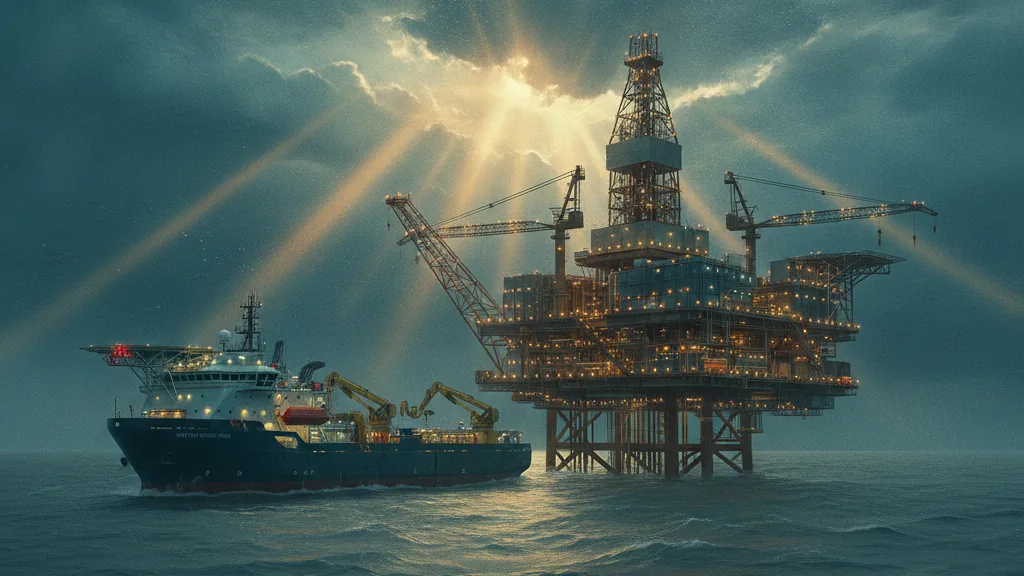
Photo: John D Fielding · CC BY via Openverse
This article is part of our in-depth guide to 28 days in saturation: what the month is actually like — the complete picture, with sources.
This article is part of our in-depth guide to 28 days in saturation: what the month is actually like — the complete picture, with sources.
This article is part of our in-depth guide to 28 days in saturation: what the month is actually like — the complete picture, with sources.
This article is part of our in-depth guide to 28 days in saturation: what the month is actually like — the complete picture, with sources.