The tender is the diver's assistant: the person on deck who dresses the diver, handles their umbilical, works the panel under supervision and is the first response in an emergency. Almost no commercial diver starts out diving. You start as a tender, and that's where you learn how a diving operation really works.
There's an image of commercial diving that circulates a lot: the diver going down with a helmet, lights and tools. It leaves out the other half of the picture, the one on deck, putting up with cold and long hours, holding the diver's line. That's the tender, and that's the role almost everyone starts in.
What a tender is
The tender is the diver's assistant: the team member who attends directly to the diver from the surface. It isn't a support role or a symbolic first step. It's part of the diving team, it's included in the emergency plan, and it carries specific responsibilities that the safety of the person below rests on.
On most operations the role rotates. The same team alternates who dives, who tends and who's on standby, depending on the plan and workload. What sets apart someone starting out is that they spend almost all their time on deck, and that's deliberate.
What they actually do
Prepare and dress the diver
Before every dive there's a long sequence of checks: the helmet and its valves, the harness, the suit, the hot water suit if one's used, the connections and the tools going down. The tender takes part in that check and physically dresses the diver, who has very limited freedom of movement once fully kitted out.
Handle the umbilical
This is the function that defines the role. The umbilical carries gas, comms, a pneumo depth gauge, hot water and often video. The tender pays it out and takes it in, keeping just the right length: too loose and it snags on the structure, too tight and it limits the work and gets in the diver's way.
With practice, the umbilical becomes a channel of information. By feel you can tell if the diver is moving forward, working at a fixed point, or being held up by something. There's also an agreed line-pull code, which remains the backup when voice comms fail.
Communicate and log
The tender listens for the diver's voice, passes on what the supervisor indicates, and contributes to the dive log: times, depths, task changes, incidents. That record later feeds into the diver's logbook and the job's documentation.
Assist at the panel under supervision
Control of the gas and the panel is the supervisor's responsibility, but this is where the tender learns, watching and carrying out tasks under instruction, how mixes, reserves and supply changes are managed.
Be the first response
If something goes wrong, the tender is closest to the problem. Recovering a diver by the umbilical, assisting the standby diver's entry, preparing oxygen, clearing the recovery area: all of it is rehearsed until it becomes automatic, because in a real emergency there's no time to think through the sequence.
Why it's the real way in
The reason is simple: no one entrusts underwater work to someone who hasn't shown how they behave on deck. A newly certified diver knows how to dive, but doesn't know how to work. They know how to use the gear, but not the pace of a job, the chain of decisions, or what a twelve-hour operation in bad weather actually means.
The tender role solves both problems at once. The company watches the person for weeks before putting them in the water, and the person learns the trade from the only place you can see the whole of it. That's exactly the logic we explain in how to start in commercial diving with no experience.
There's a second, less obvious reason. Progressing to supervisor requires understanding the operation as a system: planning, gas, communication, coordination with the rest of the vessel, handling the unexpected. All of that is seen from the deck, not from the bottom. The best supervisors tend to be the ones who were good tenders. In from diver to supervisor we cover that path.
What the day-to-day is like
It's worth not romanticising it. Being a tender is physical work, long and often uncomfortable: cold, rain, wind, split shifts, dead time and then an hour of total intensity. You load cylinders, coil hoses, clean gear, and check equipment that had apparently already been checked.
And you get paid less than diving, because a good part of the trade's pay is tied to time in the water and to depth, as we looked at in how much a diver earns. Many of the people who leave the sector do it at this stage, not because of the risk of diving but because of the routine of waiting.
Whoever makes the most of it, though, comes out with something hard to buy: the team's trust. In a trade where access to work depends on personal references, having a supervisor willing to vouch for you is worth more than any CV.
What you need to get in
On serious professional operations, tender isn't a role with no requirements. It's usual to require:
- Commercial diving certification recognised in the market you're working in, as covered in certifications.
- A valid medical fitness certificate that's current.
- Safety and survival courses required by the operator for offshore work.
- Physical fitness good enough for demanding deck work.
- Availability available to travel at short notice, which in practice is what weighs heaviest at the start.
The full training path is at how to become a commercial diver, and the schools where you can take it are at schools.
A piece of core advice
The most common mistake newcomers make is treating the role as a formality: doing the bare minimum while waiting for their turn to dive. It shows, and it closes doors.
The opposite approach is what works. Asking why each thing is done, taking notes, watching how the supervisor makes decisions, learning the names of the team and the parts, volunteering for what nobody wants to do. That's exactly the behaviour a supervisor looks for when deciding who to send down next.
In commercial diving, the first job is almost never diving. It's holding the line of someone who is diving, and doing it well enough that they end up trusting you with theirs.
Line-pull signals and umbilical language
Even though voice comms are the norm today, the line-pull code is still taught and practised, for one very concrete reason: it's what's left when everything else fails. A comms cable can fail, the noise from a tool can drown out a voice, and a disoriented diver might not respond.
Codes are agreed and reviewed at the pre-dive briefing, with one fixed rule: every signal received gets a response, and a signal that gets no response is treated as an emergency until proven otherwise.
Alongside the signals there's a less formal language you pick up over the hours. The tension in the umbilical tells you whether the diver is moving forward, working at a fixed point, or being held up by something. An experienced tender picks up a problem by feel before it comes over the radio, and that anticipation is exactly what makes the role valuable.
Frequently asked questions
Is a tender a diver or a helper?
They're usually a certified diver who doesn't yet have enough experience to work in the water on that particular job. It's a diving-team role, not support staff, and on most operations the roles rotate among team members.
How long do you spend as a tender?
It depends on the market, the company and the workload. It can range from a few months to several years. The progression isn't set by the calendar but by logged hours and the trust your way of working generates.
What is umbilical handling?
It's managing, from the deck, the line connecting the diver to the surface: paying out and taking in just the right length, keeping it free of snags, feeling by touch what the diver is doing, and responding to the agreed signals.
Does being a tender pay well?
It pays less than diving, because pay in commercial diving includes bonuses tied to time in the water and to depth. It's a paid learning stage, not a destination.
Do you need certification to be a tender?
On professional operations, yes: the usual requirement is a recognised commercial diving certification, a current medical fitness certificate and safety courses, because the tender is part of the diving team and the emergency plan.
What do you learn as a tender that you don't learn diving?
The whole operation seen from the outside: how a dive is planned, how the supervisor communicates with the diver, how the unexpected is handled and what makes a team work. That perspective is the foundation for becoming a supervisor.
Published 23 August 2026 · By Arthur More, professional saturation diver
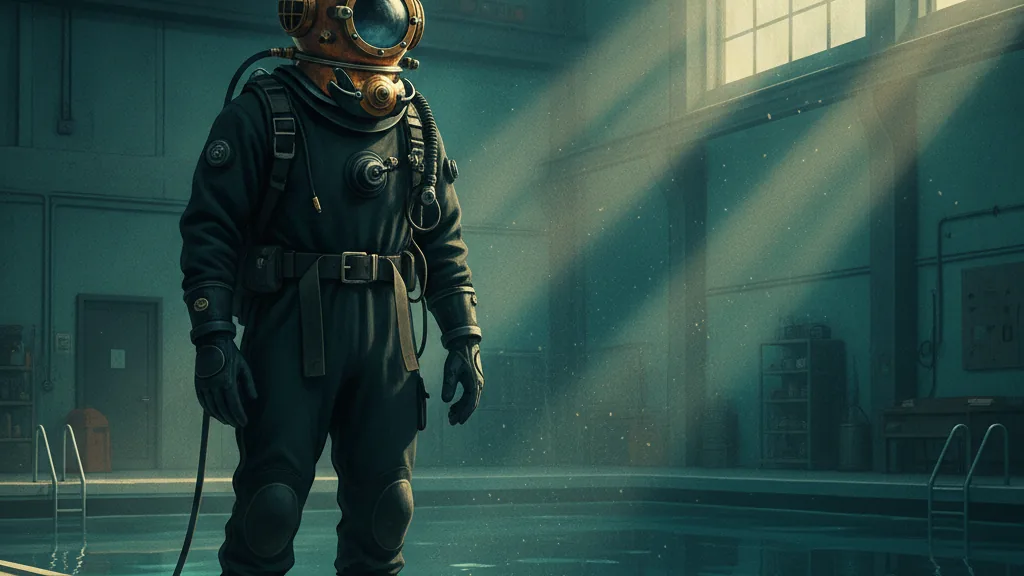
Photo: SurfaceWarriors · CC BY-SA via Openverse