On 6 July 1988 the Piper Alpha platform, in the British North Sea, suffered an explosion and fire that killed 167 people. The subsequent investigation, led by Lord Cullen, issued 106 recommendations and triggered the most far-reaching regulatory change in offshore history: the shift from prescriptive regulation to the safety case regime.
Anyone working offshore today, diver or not, operates under rules that exist because of what happened one night in July 1988 in the North Sea. Piper Alpha isn't just the worst accident in the history of the offshore oil industry: it's the point where the sector changed the way it thinks.
This article tells what happened and what came out of it. 167 people died and 61 survived. It deserves an accurate account, without added drama.
What Piper Alpha was
Piper Alpha was a fixed platform installed in 1976 in the Piper field, about 200 kilometres north-east of Aberdeen, operated by Occidental Petroleum. It started out producing oil, and years later gas processing was added, a major modification that changed the installation's risk profile.
That addition had a consequence that would prove decisive: the original layout had placed the most hazardous modules away from personnel areas, but later modifications brought gas processes closer to the control room and the accommodation. The separation logic the platform had been designed around was compromised.
The platform was also a hub in the network: it received production from the Tartan and Claymore platforms and sent it ashore. That detail explains much of the scale of what happened.
The night of 6 July 1988
The origin
During the day, a safety valve had been removed from one of the two condensate pumps for maintenance. A temporary blank flange was left in its place. The work couldn't be finished during the shift and was left pending. The permit to work documenting that situation didn't reach the night shift effectively.
During the night the other condensate pump, the one in service, failed. Unaware that the standby pump had a safety valve removed, personnel started it up. Pressurised condensate escaped through the temporary flange. The first explosion happened at 21:58.
The escalation
The initial explosion damaged firewalls that had been designed to contain fire but not to withstand a blast wave. Crude oil lines ruptured and an intense fire began, fed by the process itself.
The pressurised water firefighting system was in manual mode. That was standard practice when divers were working in the water, to stop them being drawn into the sea chests. The consequence was that the system didn't start automatically.
The decisive factor came afterwards. Tartan and Claymore kept pumping towards Piper Alpha. Their operators had no authority to stop production without approval from above, and communication was confused. Around 22:20 a large-diameter gas line ruptured, and the resulting fireball made the platform impossible to save.
The accommodation
Procedure called for gathering in the accommodation module and waiting for helicopter evacuation. Smoke and fire made it impossible for any helicopter to get close. The accommodation filled with smoke.
Most of those who survived did so by disobeying procedure: they jumped into the sea from heights of tens of metres. Most of those who waited inside, following what they had been trained to do, died. Of the 226 on board, 165 died; two crew members of a rescue vessel were added to that toll, bringing it to 167.
The support vessel Tharos, with firefighting capacity and a rescue team, couldn't get close enough because of the intensity of the fire.
The Cullen inquiry
The British Government commissioned the public inquiry from Lord William Cullen. The report was published in November 1990 in two volumes and remains a reference text in industrial safety.
Cullen didn't stop at identifying the technical failure. He went further and pointed to management failures: a permit-to-work system that functioned poorly, shift handovers where critical information wasn't passed on, inadequate emergency training, a culture where production mattered more than safety, and a regulator — the Department of Energy — with a conflict of interest, because it promoted production while also policing it.
The report issued 106 recommendations. Industry accepted all of them.
What changed
The safety case regime
The fundamental change was moving from regulation that said what to do to regulation that requires the operator to demonstrate it has its risks under control. Under the safety caseregime, each installation must submit a document to the authority identifying the major hazards, describing how they're controlled, and demonstrating they've been reduced to a level as low as reasonably practicable. Without acceptance of that document, there's no operating.
This model has since been exported and today underpins offshore regulation in Norway, Australia and much of the world.
Separating regulator from promoter
Oversight of offshore safety moved from the Department of Energy to the Health and Safety Executive, an independent body with no responsibility for production. It's the same HSE whose diving certifications remain an international reference, and which we compare in the article on which certification to choose.
Physical changes
The recommendations produced requirements that are now standard: subsea shutdown valves to isolate lines from the seabed, temporary refuges resistant to fire and smoke with pressurisation, protected evacuation routes, firefighting systems with guaranteed automatic modes, and clear, explicit authority for any connected installation to cut off supply without asking permission.
Management changes
Permit-to-work systems were rebuilt from scratch, with verification of isolations and a formal, documented handover between shifts. Every worker's right and duty to stop an unsafe operation without consequences became standard practice. And training in emergencies, sea survival and helicopter evacuation became mandatory and periodic: this is the origin of the survival certificate now required for any offshore work.
What it meant for diving
Commercial diving was affected in several ways. The most obvious is that every diver working offshore is subject to the same regime: mandatory survival training, familiarisation with the installation, participation in drills, and the right to stop work.
The detail of the firefighting system being in manual mode because of divers in the water also left a concrete lesson about how risk controls interact with each other. A control put in place to protect a diver disabled another that protected the whole installation. That kind of interaction is now explicitly examined in any serious risk assessment.
More broadly, Piper Alpha accelerated the professionalisation of the offshore diving sector, with international standards, contractor audits and traceable competence records for personnel. The way diving companies are contracted and audited today is a direct legacy of that process.
Remembrance
There's a memorial to the victims in the memorial garden at Hazlehead Park, in Aberdeen, with the names of the 167 who died. A remembrance service is held every 6 July.
In the industry, the anniversary is commonly used as a day of reflection on safety. It isn't an empty gesture: the value of remembering Piper Alpha is that none of the failures that caused it was exotic. A badly closed permit to work, an incomplete shift handover, unclear authority to stop work. These are things that can happen again on any installation, which is why they're remembered.
If you're interested in the context of offshore installations and the market divers work in, we have more in plataformas and in where the work is.
Frequently asked questions
How many people died on Piper Alpha?
167 people died: 165 of the 226 on board the platform and two crew members of a rescue vessel. 61 survived. It remains the worst accident in the history of the offshore oil industry.
What was the initial cause of the accident?
A condensate leak through a temporary flange fitted where a safety valve had been removed for maintenance. The night shift was unaware of the situation because of a failure in the permit-to-work system, and started the affected pump.
What is the Cullen report?
It's the result of the public inquiry led by Lord William Cullen, published in November 1990. It examined the technical and management causes of the accident and issued 106 recommendations, all of which industry accepted.
What is the safety case regime?
It's the regulatory model adopted after Piper Alpha. It requires the operator of each installation to demonstrate, in writing, to the authority that it has identified its major hazards and reduced them to a level as low as reasonably practicable. Without acceptance, there's no operating.
How did Piper Alpha affect commercial divers?
It imposed mandatory survival and evacuation training for all offshore personnel, established the right to stop unsafe work as standard, and accelerated the professionalisation of the sector, with contractor audits and traceable competence records for personnel.
Where are the victims remembered?
At the memorial garden in Hazlehead Park, Aberdeen, where there's a monument with the names of the 167 who died. A remembrance service is held every 6 July.
Published 20 August 2026 · By Arthur More, professional saturation diver
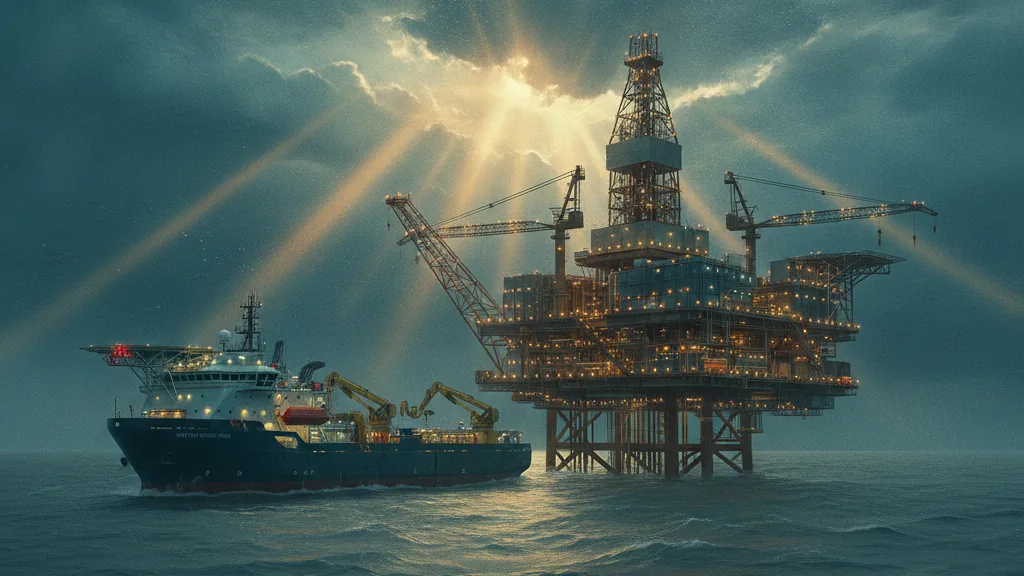
Photo: bseegov · dominio público via Openverse