Floating wind moves the structure into deep water, where conventional diving stops being viable. The underwater work concentrates on moorings, dynamic cables and connections, and it is mostly done by ROV. What is left for the diver is the shallow-water work, the port, the tow and the onshore connection work.
Offshore wind has for years been the sector that has grown the most in underwater work in Europe. Up to now, almost everything has been built with fixed foundations: monopiles or jackets driven into the seabed, at moderate depths, where the diver has a clear role. Floating wind changes that equation, and it is worth understanding how before making career decisions based on headlines.
The short answer is that floating wind generates less diving inside the farm and shifts the work to other phases of the project. The long answer is worth a few minutes.
What exactly a floating farm is
In a conventional farm, the tower sits on a structure anchored to the seabed. That limits the viable depth: past a certain point, driving in a foundation stops being cost-effective.
In a floating farm, the turbine is mounted on a platform that floats and is held in position by a mooring system: lines running from the platform down to anchors or piles on the seabed. This makes it possible to install turbines at depths that were previously unthinkable, and it opens up areas with a narrow continental shelf to wind power.
The consequence for underwater work is immediate: the critical part of the structure is no longer at thirty metres, but several hundred. And no one dives down there.
Where the underwater work is in a floating project
The mooring system
This is the heart of the matter. Each platform is held by several lines — chain, steel wire, synthetic fibre or combinations of these — ending in suction anchors, piles or drag anchors. That system has to be installed, tensioned, verified and then inspected periodically for the whole life of the farm.
It is an enormous amount of work by volume. And by depth, it is a job for ROVs and vessels, not divers. What the sector does inherit is all the experience built up in mooring chain and line inspection in oil and gas, where this expertise was developed first.
Dynamic cables
This is where the most interesting technical novelty lies. In a fixed farm, the cable rests on the seabed and there is only movement at the point where it enters the structure. In a floating one, the section connecting the platform to the seabed moves continuously with the waves and drift. It is shaped into a curve using buoyancy modules so it can absorb that movement without bending too sharply.
A cable that moves every day for twenty-five years is a fatigue problem. It needs specific inspection and a level of monitoring that did not exist in fixed-foundation wind. Again, most of it is done with a remote vehicle.
The shallow section and the onshore connection
Every farm, floating or not, needs to get the power to shore. That export cable crosses the continental shelf, enters shallow water and reaches a landing connection point. And that is where diving happens: cable burial and protection in shallow sections, work in the surf zone, construction on the landing infrastructure, inspection of protections.
It is less glamorous than working out in the farm, but it is where the diver is. We also cover it in the article on laying and repairing submarine cables.
The port and assembly
A big difference with floating wind is that the platforms are assembled afloat, in a port or at an anchorage, and then towed into position. That phase generates accessible underwater work: checking hulls and ballast compartments, inspecting tow points, verifying connections, pre-tow checks and corrective work.
It also generates work the other way round: when a platform needs a major repair, it can be disconnected and towed back to port. That is a maintenance advantage of floating over fixed wind, and it means more work in sheltered water and less offshore.
The split between diver and ROV
It is worth being precise here, because this is where most of the noise is. Floating wind does not swap divers for robots as a matter of fashion: it swaps them because the depth makes surface-supplied diving unviable, and because setting up saturation for inspection tasks would be absurdly expensive.
That said, the ROV does not do everything. There are still scenarios where the diver provides what no machine handles well: fine manual dexterity, work in confined spaces, unplanned intervention, tasks in the surf zone where an ROV struggles, and everything that happens in shallow water. The general discussion is in ROV vs diver.
For someone planning a career, the strategic reading is twofold. On one hand, betting a career purely on floating wind as a source of deep diving is a mistake. On the other, the wind sector as a whole — fixed plus floating, plus all the connection infrastructure — remains one of the biggest generators of underwater work in Europe.
What training puts you in a good position
Inspection. This is the clearest lever. A diver who is also a qualified inspector can document the condition of a structure with judgement, and that is valuable in wind, oil and gas, and civil works. See underwater inspector.
Mooring and rigging work. Understanding chains, shackles, tensions and rigging. Floating wind is, at bottom, a mooring problem on an industrial scale. See rigging and slinging.
Wind-sector-specific training. The survival and safety courses specific to offshore wind are a usual requirement for going out to a job, different from the classic oil-and-gas package.
A grounding in ROVs. Not to stop diving, but to work in mixed operations. More and more teams combine diver and vehicle on the same task, and whoever understands both sides is more useful.
What to expect in the coming years
Floating wind is still at an early stage compared to fixed wind: there are commercial projects under way and many more announced, but the installed volume is small in relative terms. That means the associated work is also just starting out, and that a good deal of the inspection and maintenance procedures are being written right now.
For a professional, that is a concrete opportunity: new sectors reward whoever gets in early and builds experience while everyone else is still learning. But it is worth going in with realistic expectations: the diver's work in floating wind is in the port, on the coast and in the shallows, not three hundred metres under a turbine.
If you are interested in the wind sector in general, the starting point is the article on commercial diving in offshore wind farms, and to see where this market fits against others, the guide to where the work is.
How a floating farm is maintained
The maintenance model is one of the most interesting differences from fixed wind, and it explains fairly well where the human work sits.
In a fixed farm, any major underwater repair has to be done on site, with a vessel, divers or ROV, and at the mercy of the weather. In a floating one there is an alternative: disconnect the platform from the cable, release the moorings and tow it to port. It is repaired there in sheltered water, with easy access and no weather windows to wait for.
That shifts work from offshore to the port, and port work is very much diver territory: hull inspection, checking ballast compartments, verifying connection points, pre-tow checks and corrective work below the waterline. It is a type of task that looks more like ship repair than classic offshore work.
There is also the maintenance of the moorings and the cable, which stay at sea and are inspected with a remote vehicle, and the maintenance of the coastal infrastructure and the connection substation, where shallow diving comes back into play.
Specific risks of working around floating structures
Diving near something that moves with the waves has its own rules. A floating platform is not a static structure: it pitches, shifts, and its lines tension and slacken. Working underneath it or near its moorings requires understanding that movement and staying clear of the zones where a line can sweep through a dangerous arc.
On top of that there is the risk of being crushed between moving structures during port manoeuvres, the presence of ropes and cables under tension, and the need for very close coordination with the surface team controlling the manoeuvres. This is the kind of work where the permit to work and constant communication are not formalities.
A career takeaway
If you are deciding where to invest your training, the practical conclusion is that it is worth thinking in terms of "the wind sector" rather than "floating wind". The whole picture — fixed farms, floating farms, export cable, substations, coastal works, base ports — is one of the biggest employers of underwater work in Europe, and it is going to keep growing.
Within that picture, the profiles that position themselves best are the ones that combine diving with inspection, knowledge of mooring and rigging, and the ability to work in mixed operations alongside remote vehicles. It is also a bet that does not get wasted if the sector shifts: those same skills are useful in oil and gas, in marine construction and in salvage.
Frequently asked questions
Is there diving work in floating wind?
Less than in fixed-foundation wind, and different. The ROV handles the deep work; the diver comes in mainly during the port and assembly phase, at the onshore connection point, in shallow water and in accessible inspection work.
Why isn't there diving in a floating farm?
Because floating farms are installed at depths beyond the operating range of surface-supplied diving, and where saturation would be disproportionately expensive for tasks an ROV handles better.
What is a dynamic cable?
It is the electrical cable that connects a floating turbine to the seabed or to another structure, and that moves constantly with the platform. Since it is not resting on anything, it suffers fatigue and needs buoyancy elements and specific inspection.
Does floating wind reduce diver employment?
It reduces diving inside the farm, but it creates work in other phases: assembly in port, towing, the export cable in shallow water, onshore connection works and maintenance at coastal facilities.
What training is worth having to get into wind?
Beyond diving certification, training in underwater inspection helps a great deal, along with the survival and safety courses for the offshore wind sector, and experience in cable and mooring work.
Published 3 September 2026 · By Arthur More, professional saturation diver
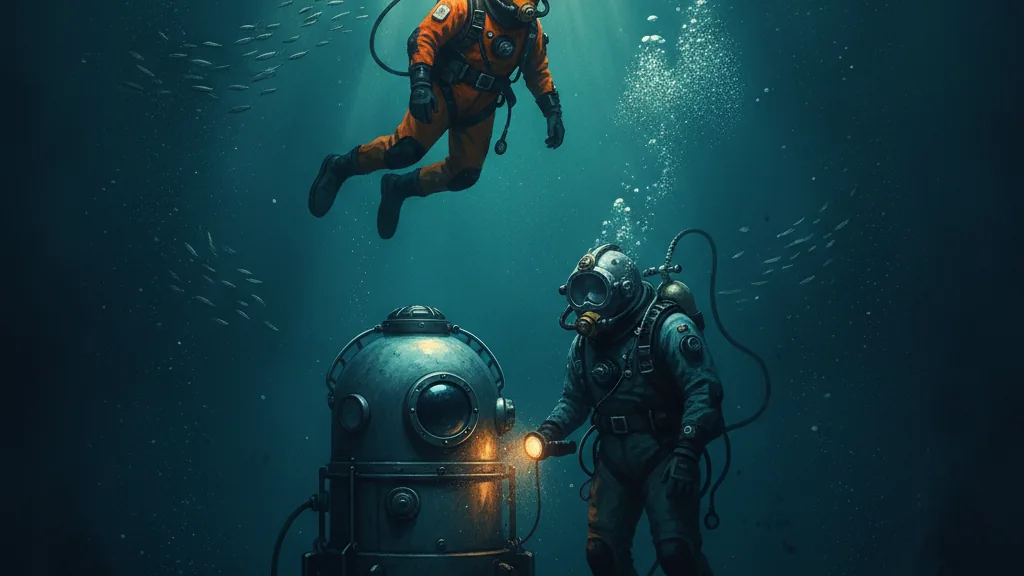
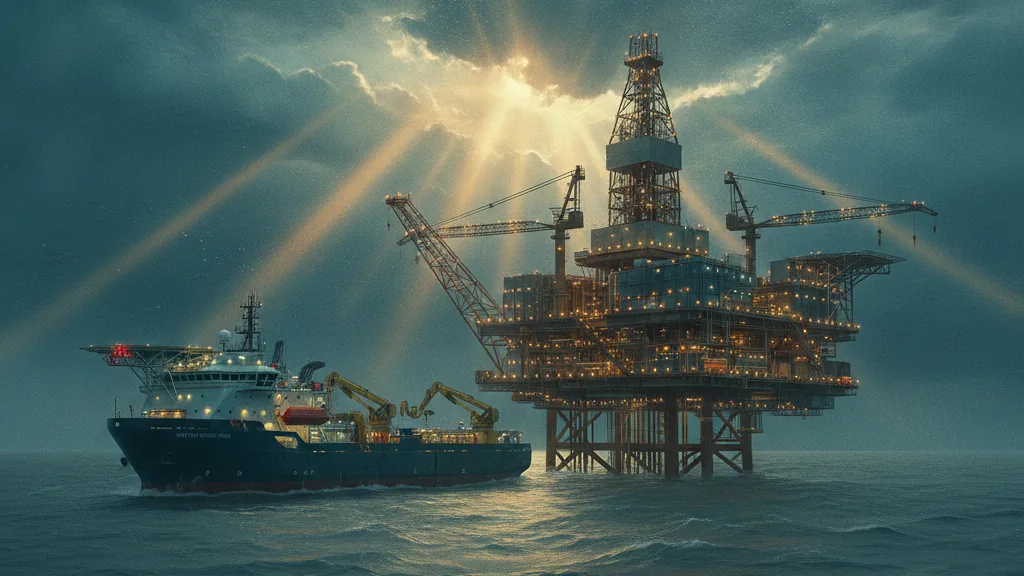
Photo: archer10 (Dennis) · CC BY-SA via Openverse