West Africa is one of the world's great underwater work basins. Angola and Nigeria concentrate deepwater fields with extensive subsea infrastructure, and saturation diving is used mainly for inspection, repair and maintenance of lines and structures. The real barrier to entry isn't technical: it's local content.
When people talk about where saturation work happens, the conversation usually centres on the North Sea, Brazil and the Gulf of Mexico. West Africa comes up less, yet it's one of the regions with the most underwater activity on the planet. Understanding how it works helps you read the market properly, even if you never end up working there.
What makes this basin distinctive is that it combines two things that don't always go together: a lot of infrastructure installed in deep water, and a regulatory framework that prioritises national employment. That completely shapes how a foreign diver gets in.
Angola: the deepwater of Block 17 and its surroundings
Angolan offshore development is organised into numbered exploration blocks. The deepwater blocks off the coast — Block 17 is the best known internationally, with 15, 18 and 32 among the most significant — hold a notable concentration of subsea developments tied back to floating production, storage and offloading units, known as FPSOs.
That model has a direct consequence for diving: almost everything sits on the seabed. Subsea wellheads, manifolds, control umbilicals, flexible flowlines, risers. There are no fixed jacket structures to tie into like a classic North Sea platform; instead there are extensive subsea fields served by vessels.
That's why most routine intervention in Angola is done with ROVs. Saturation diving comes in where the robot can't do the job well: connections that need fine manipulation, unplanned repairs, clamp installation, hands-on inspection, and work on the shallower parts of the infrastructure and on export facilities close to shore.
Nigeria: mature fields and deepwater developments
Nigeria combines two realities. On one hand, a shallow-water and Niger Delta offshore sector with decades of history, with ageing infrastructure that needs constant maintenance. On the other, deepwater developments like Bonga and Egina, which follow the same subsea-and-floating pattern as the Angolan ones.
That combination generates two very different kinds of demand. In the mature, shallow fields there's a good volume of surface-supplied diving work: structure inspection, anode replacement, cleaning, pipeline repairs. In the deepwater developments, the pattern is the same as in Angola: ROVs as the main tool, and saturation for whatever needs hands.
If you want the general map of basins, you'll find it in where saturation diving happens, and the inventory of installations in plataformas offshore.
Who operates there
The market structure has three layers. At the top, the international operators and national oil companies, who award the contracts. In the middle, the big global subsea contractors, who execute installation and IRM (inspection, repair and maintenance) projects with their diving and construction vessels. At the bottom, local and joint-venture companies that supply personnel, logistics and services, and which are in many cases mandatory partners for the foreign contractor.
That third layer is the key to understanding the job market. The global contractor may have the vessel and the technology, but needs a local structure to operate, and that structure carries national employment commitments. The directory of contractors is in commercial diving companies.
Local content: the real barrier
Both Nigeria and Angola apply local content policies: legal requirements that a percentage of personnel, contracted services and project value be national. The logic is obvious from the country's point of view: turning hydrocarbon revenue into domestic employment and industrial capacity.
For a foreign diver, this means several practical things:
Entry-level positions are reserved. You won't get into this region as a junior diver looking for your first campaign. Those are exactly the posts filled with local personnel.
Scarce skills are what gets hired in. Foreigners come in where there's no national replacement available: supervision, life support, hyperbaric welding specialities, systems technicians. In other words, people with a track record, not people starting out.
The paperwork is serious. Work permits, visas sponsored by the local company, health entry requirements for the country, sometimes qualification validations. None of this is arranged on your own: the contractor handles it.
Work is done by campaign. The dominant model is mobilisation for a specific project, with rotations, and demobilisation once it's finished. It isn't stable, resident employment.
How you actually get in
Almost always indirectly: working first for an international contractor in another basin and being mobilised to West Africa when that contractor wins a project there. The vessel arrives with its diving crew, and you go with the vessel.
The other route is through crewing agencies specialising in this and with relationships with the contractors active in the region. They usually look for specific profiles to fill a rotation, with short notice and tight certification and experience requirements.
Either way, the way into the trade is still the same as ever: get trained, build up hours in an accessible market, and build a track record. That's covered in how to train in commercial diving.
What kind of tasks are done
It's worth making this concrete, because "underwater work" is too broad a label. In this basin, what keeps diving crews busy breaks down roughly as follows.
Integrity inspection. Structures, flowlines, risers and moorings on the floating units need periodic campaigns of visual inspection and NDT. It's repetitive work, well proceduralised, and high in volume.
Repair and intervention. Anode replacement, fitting reinforcement clamps, coating repair, correcting free spans in flowlines. This is where the human hand still makes the difference over the robot.
Installation support. Connecting lines, guiding structures onto the seabed, checking settlement. This tends to be peak-activity work, tied to a specific project.
Export terminals and single-point moorings. Loading facilities close to shore sit at accessible depths and need constant maintenance. It's a steady source of surface-supplied diving work, not saturation.
How it compares with other basins
Compared with the North Sea, West Africa offers better weather conditions and longer campaigns, but a job market far more closed to foreigners and a safety culture that's less consistent between operators. The North Sea has the highest standard, and also the toughest competition for posts.
Frente a Brazilthe parallel is notable: both are deepwater basins dominated by subsea infrastructure, with local content rules and a national company carrying a lot of weight in contract awards. The main difference lies in the language and the size of the domestic market.
Compared with the Gulf of Mexico, West Africa has less routine shallow-water work and more concentration in large projects.
Conditions and realities on the ground
The oceanographic conditions in the Gulf of Guinea are, on the whole, milder than those of the North Atlantic: warm water, moderate swell for most of the year, and none of the narrow weather windows that define the North Sea. That allows long, stable campaigns.
In exchange, there are factors well worth bearing in mind. Visibility can be poor near the delta because of sediment discharge. Mobilisation logistics are slower than in Europe. And the security situation varies by area and by moment, with company-specific protocols for travel and for operations in certain areas. Serious contractors have detailed plans for this, and it isn't improvised.
Is it worth having on the radar?
Yes, but with calibrated expectations. West Africa isn't an entry-level market: it's a mobilisation destination for already-established professionals. Its value lies in the volume of subsea infrastructure installed, which guarantees decades of inspection and repair work, and, further down the line, decommissioning.
If you're building a career, the right way to read this is that this basin widens the global job market and sustains demand for experienced profiles. To get there, the path first runs through making a name for yourself in an entry-level basin. The comparative pay picture is in how much a diver earns.
Frequently asked questions
Can you get into offshore diving by starting in West Africa?
In practice, no. Angola and Nigeria apply local content policies that reserve entry-level posts for national personnel. Foreigners come in where there's no local replacement available: supervision, life support, scarce technical specialities. It's a mobilisation destination for experienced professionals, not a market for landing your first campaign.
What kind of diving work is there in Angola?
Angola's deepwater infrastructure is mostly subsea and tied back to floating production units, so routine intervention is done with ROVs. Saturation diving is used where the robot can't do the job well: connections that need fine manipulation, unplanned repairs, clamp installation and hands-on inspection, plus work on shallower installations.
What is local content and how does it affect a diver?
It's the legal requirement that a percentage of personnel, services and project value be national. For a foreign diver it means that entry-level posts are reserved, that only scarce skills get hired in, that the visa and work permit are sponsored by the local company, and that the usual model is campaign mobilisation rather than stable employment.
How do you get diving work in Nigeria or Angola?
Almost always indirectly: working for an international contractor in another basin and being mobilised when that contractor wins a project in the region. The other route is specialist crewing agencies with direct relationships with the contractors active there, who look for specific profiles at short notice with tight requirements.
What are working conditions like in the Gulf of Guinea?
Oceanographic conditions are milder than in the North Atlantic: warm water and moderate swell for most of the year, which allows long, stable campaigns. On the other hand, visibility can be poor near the Niger Delta, mobilisation logistics are slower, and there are company-specific security protocols depending on the area.
Published 21 August 2026 · By Arthur More, professional saturation diver
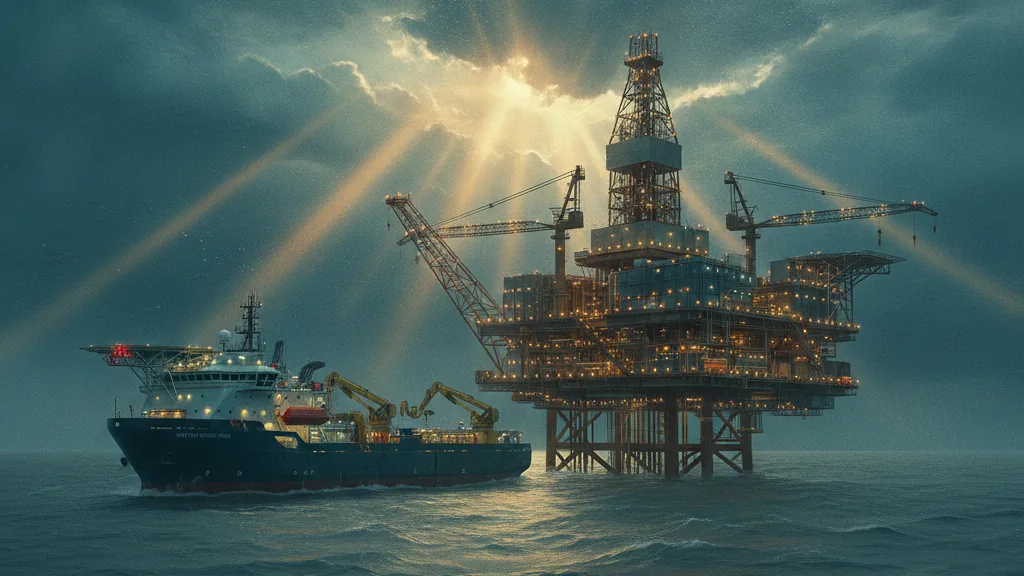
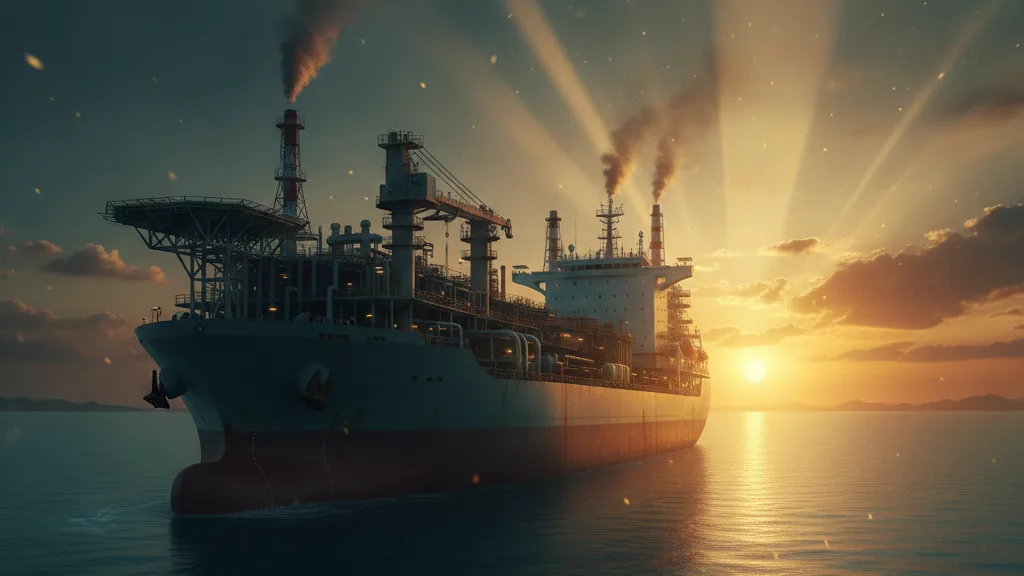
Photo: infomatique · CC BY-SA via Openverse
This article is part of our in-depth guide to how deep a commercial diver can actually go — the complete picture, with sources.
This article is part of our in-depth guide to how deep a commercial diver can actually go — the complete picture, with sources.
This article is part of our in-depth guide to how deep a commercial diver can actually go — the complete picture, with sources.
This article is part of our in-depth guide to how deep a commercial diver can actually go — the complete picture, with sources.